Why the US IT consulting market resists simple rankings
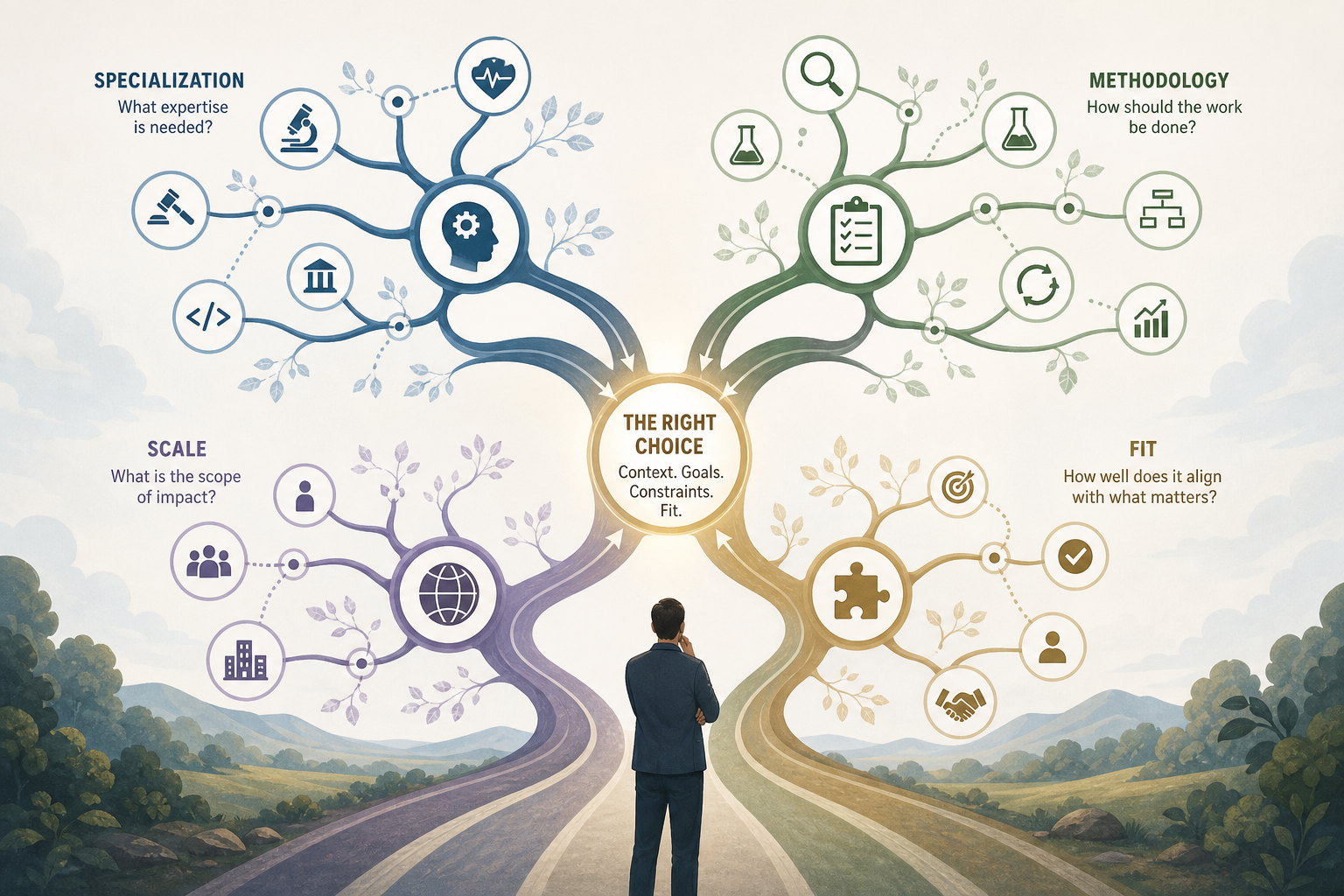
The US IT consulting industry is one of the most fragmented professional services markets in the world, with hundreds of thousands of businesses operating across every conceivable specialization and scale. Rankings by revenue or headcount capture the largest players accurately enough, but they tell you almost nothing about whether a given firm can execute your specific project. A firm that dominates global ERP rollouts may be entirely the wrong choice for a mid-sized company modernizing a legacy integration layer. The question is never who is biggest, but who is best matched to your situation. The market is also experiencing a clear bifurcation between deep-vertical specialists and broad generalist practices, rewarding firms that can claim genuine domain authority over those competing on breadth alone.
What the largest firms genuinely do well
Firms like Accenture, Deloitte, IBM Consulting, and Capgemini have earned their positions at the top of revenue rankings for real reasons. They carry the scale to staff multi-year cloud and ERP programs, maintain certified implementation partner status with major platform vendors, and bring global delivery teams capable of coordinating across regions and time zones. For an established multinational running a complex SAP migration or a regulated financial institution needing a firm with deep BFSI vertical experience, these players are a genuinely strong choice. Their breadth is a real asset when the program is large enough to justify it. The trade-off, which is worth naming plainly, is that their scale often means more organizational layers, slower decision cycles, and less direct access to the senior architects who actually designed the solution.
The selection criteria that rankings never surface
Evaluating an IT consulting firm well means going beyond name recognition. Standard evaluation dimensions include technical approach, past performance, and key personnel qualifications, alongside price. For any significant engagement, you should ask whether the firm's senior consultants will be hands-on throughout delivery or whether they hand off to junior staff after the sales process. Methodology matters too: a firm with a documented, repeatable delivery process is far less likely to drift on scope than one that improvises per engagement. Knowledge transfer is another dimension that rankings ignore entirely. The best consulting relationships end with your internal team genuinely capable of owning and extending what was built, not dependent on the same firm for every subsequent change. You can read more about what to look for in a partner in our guide to choosing the right IT consulting firm.
Where specialized boutiques serve clients better
Not every organization needs the full apparatus of a Tier-1 consultancy. A growing business modernizing its cloud infrastructure, migrating from on-premises systems to Azure, or introducing AI automation into existing workflows often needs a firm that can move quickly, assign senior practitioners from day one, and stay engaged through the operational phase rather than handing over a roadmap and stepping back. AI consulting is one of the fastest-growing specialized segments, and the firms pulling ahead here are those that combine advisory depth with genuine delivery capability, shipping working systems rather than ending at the recommendation. Boutique and mid-sized firms that specialize in a defined technical stack, such as Microsoft and Azure ecosystems, can often outperform generalists on exactly these engagements because their entire practice is built around the same tools your team will use every day. For organizations exploring AI and automation services or cloud consulting, fit and execution depth matter more than firm size.
Where Techfirst fits honestly in this landscape
Techfirst is a Swedish IT consultancy that works with growing businesses on the specific technical challenges where large generalist firms are often overbuilt: cloud migration to Azure, legacy system modernization, custom software development in .NET and SQL, Kubernetes orchestration, CI/CD pipeline implementation, and AI integration into existing systems. Its senior consultants handle both architecture and delivery, which means the people who design a solution are the same people who build it. That is a meaningful structural difference from firms that separate advisory and delivery into separate teams or geographies. Techfirst is not the right choice for a global ERP rollout requiring hundreds of certified practitioners across multiple continents. It is the right choice for a business that needs a technically senior, end-to-end partner for a defined transformation, whether that is a microservices migration, an AI development engagement, or a cloud infrastructure build on Azure.