Your team is keeping the lights on, not moving forward
There is a specific kind of pressure that builds when your engineers spend every sprint firefighting instead of modernising. The legacy system that keeps falling over, the integration that nobody fully understands anymore, the cloud migration that has been "in progress" for eighteen months. These are not planning failures. They are what happens when the technical debt is real and the bandwidth is not there.
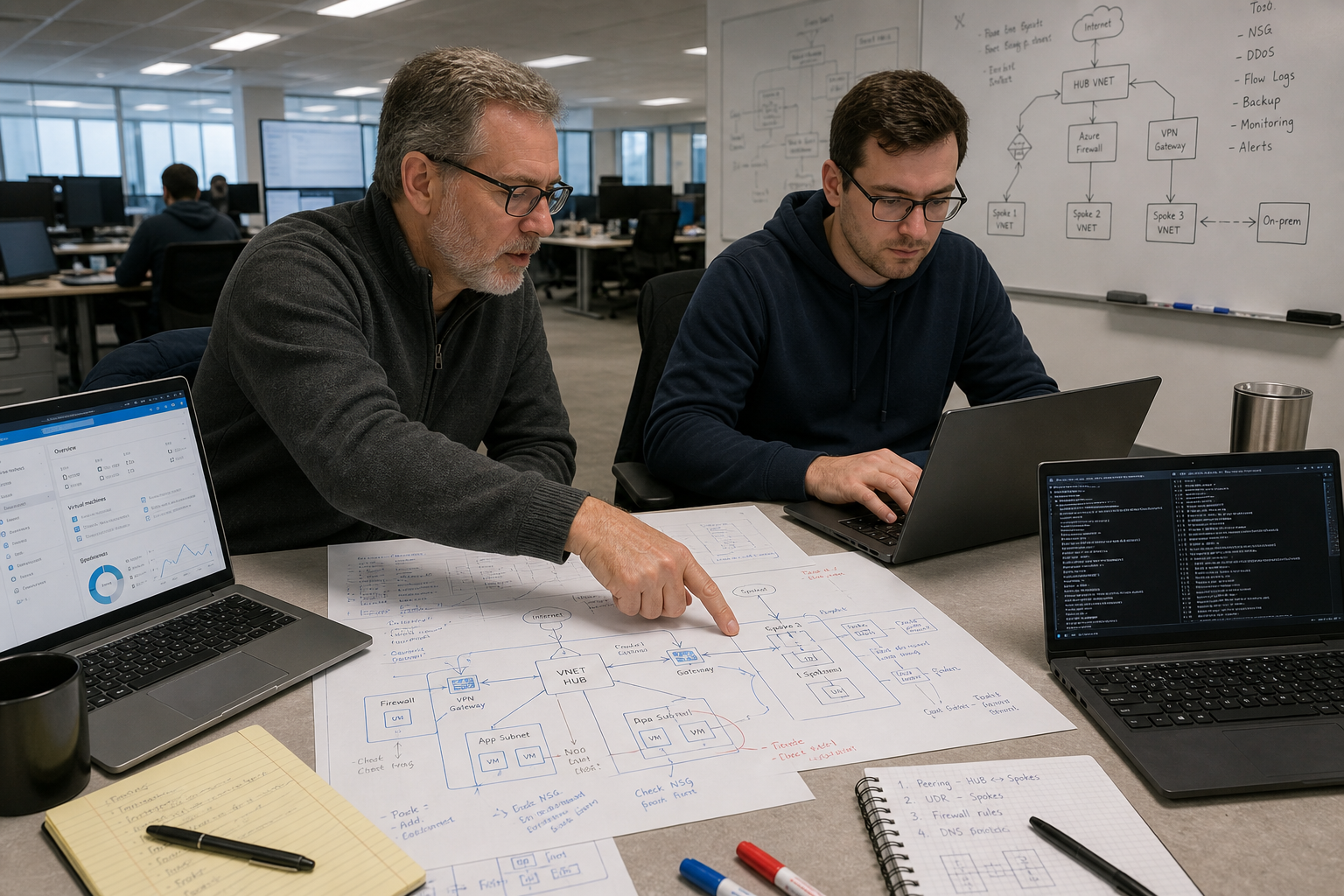
TechFirst's IT consulting engagements are built for exactly this situation. We bring in senior system architects and developers who understand the constraints you are working within, not consultants who hand you a report and leave. We assess your existing landscape, design a path forward that fits your actual environment, and then execute alongside your team.
Embedded consultants who know your stack
Generic cloud advice is easy to find. What is harder to find is someone who can sit down with your team, look at your actual architecture, and make decisions grounded in what is already there. Our consultants work across cloud infrastructure, custom software development, cybersecurity, automation, and system integrations, with deep experience in the Microsoft and Azure ecosystem including .NET, SQL, Kubernetes, Docker, and CI/CD pipelines.
Because we supply both system architects and developers, we can staff and execute projects ranging from a greenfield environment build to a full-scale legacy modernisation or a microservices migration. The engagement is bespoke from the start, shaped around your landscape, not a packaged methodology dropped on top of it.
Advisory and implementation are not separate things here
A lot of consultancies will assess your environment, produce a recommendation, and consider their job done. That is not how we work. TechFirst engagements span advisory through hands-on implementation, which means the people who design the solution are the same people who build it. There is no handoff gap where context gets lost.
This matters most during modernisation work, where the gap between a plan and a working system is where most projects stall. Whether the work is migrating on-premises infrastructure to Azure, upgrading legacy integrations to modern microservices, or introducing AI-driven automation and real-time analytics, we stay in the engagement until the outcome is delivered.
Operational stability is the baseline, not the goal
Scalability and security are not features we bolt on at the end. Every solution we design is built with operational stability, scalability, and security as the starting conditions. For teams that have been living with fragile systems, this shift is significant: instead of designing for what works today and patching it later, we build for the environment your business is growing into.
For organisations adopting Kubernetes orchestration or containerised workloads, this means production-grade architecture from the first deployment, not a prototype that needs to be rebuilt when load increases.