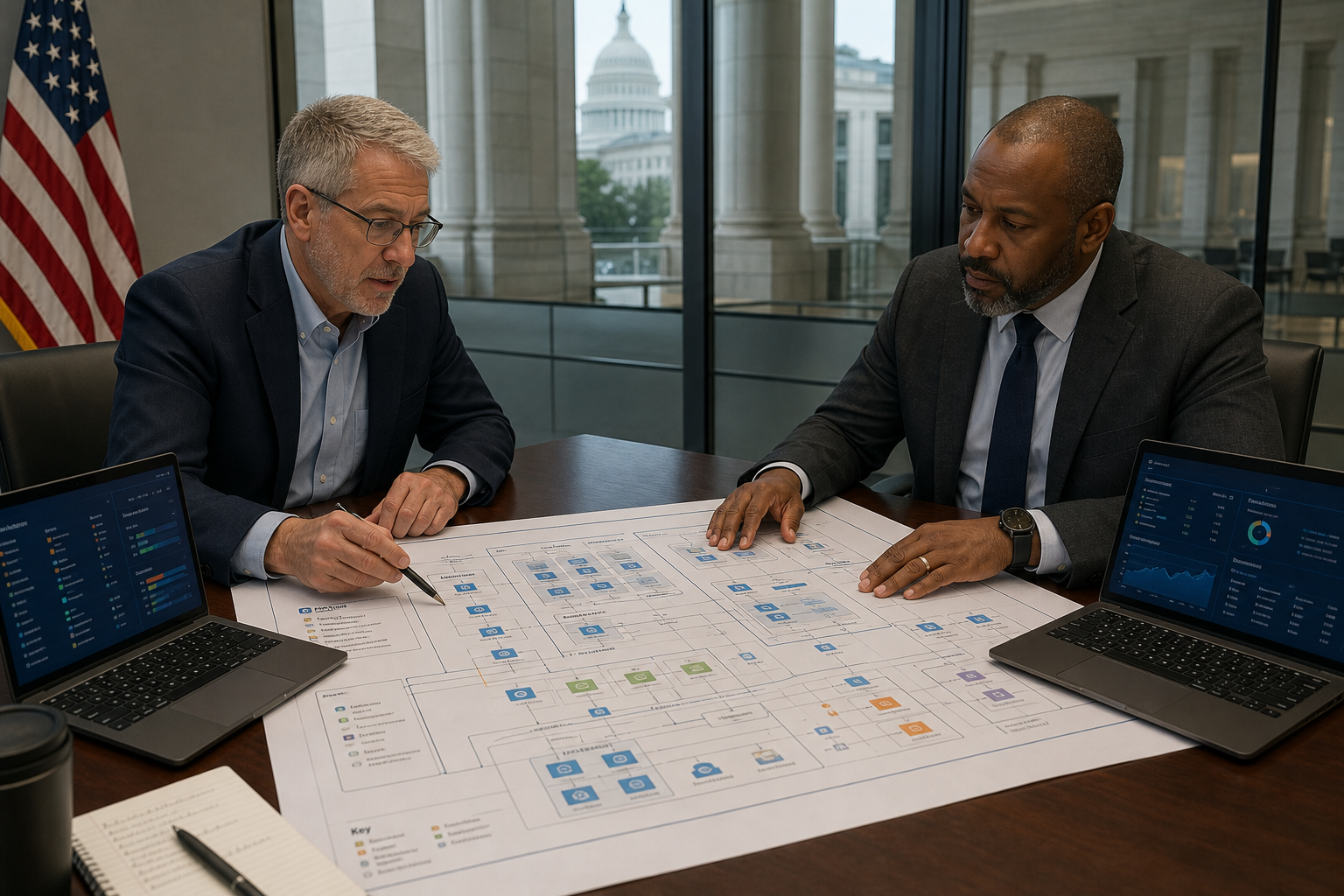
Legacy modernization in DC is harder than it looks
Six years after identifying ten critical federal legacy systems in need of modernization, only three projects have been completed. That pace reflects the real difficulty of replacing systems that are deeply embedded in operations, often undocumented, and subject to strict compliance requirements. The organizations that move slowly are not being careless. They are navigating genuine technical and regulatory complexity. TechFirst's senior consultants start by mapping what you actually have, not what the documentation says you have. That assessment shapes every decision that follows.
Compliance requirements shape every architecture decision
In Washington DC, any cloud migration touching federal data must account for FedRAMP authorization and FISMA requirements. Cloud service providers must implement security controls aligned with NIST standards, undergo independent assessments by accredited third-party organizations, and receive an Authorization to Operate. These are not optional checkboxes. They determine which services you can use, how your infrastructure must be configured, and what your security posture needs to look like before go-live. TechFirst's consulting work on Azure cloud migrations is grounded in this regulatory reality from the first architecture conversation.
Microservices and Azure are the destination, not the starting point
Replacing a COBOL-era system or decommissioning 2008-era hardware is not a lift-and-shift exercise. The target architecture needs to be designed for the workload it will carry, the integrations it will support, and the compliance environment it will operate in. TechFirst supplies both system architects and developers, which means the design and the execution stay connected throughout the engagement. There is no handoff gap between the team that drew the diagram and the team that builds it. For organizations moving toward microservices on Azure, that continuity matters more than most clients expect.
AI integration belongs in the modernization plan, not after it
Many DC-area organizations treat AI adoption as a separate initiative to pursue once the core infrastructure is stable. In practice, the decisions made during a cloud migration or microservices transition directly affect how well AI workloads can be integrated later. TechFirst's consulting engagements cover generative AI development, AI agent design, and full AI integration alongside cloud and software work. Addressing these together during the modernization phase avoids the expensive rework of retrofitting AI into an architecture that was not designed to support it.
Senior consultants, not junior teams with senior oversight
The gap between a consulting engagement staffed by senior practitioners and one staffed by junior developers with occasional senior review is significant. TechFirst embeds experienced system architects and developers directly into client engagements. They assess, design, and execute. The people who understand your landscape are the people doing the work, not writing requirements for someone else to interpret. For organizations in Washington DC managing complex legacy environments and strict compliance obligations, that distinction is the difference between a modernization that completes and one that stalls.