Most Dallas IT problems are architecture problems
The pattern repeats across industries here: a business that grew fast, made pragmatic technology choices along the way, and now has a landscape that is harder to change than it should be. Legacy integrations that nobody fully understands. On-premises infrastructure that predates the cloud. Custom software that works but cannot scale. These are not failures of effort. They are the natural result of building under pressure. Senior-led consulting exists to untangle exactly this kind of complexity, not by imposing a generic framework, but by starting with a thorough assessment of what you actually have. Dallas businesses in sectors like healthcare, energy, and professional services face this challenge at scale, and the stakes for getting modernisation wrong are high.
Bespoke engagements, not templated advice
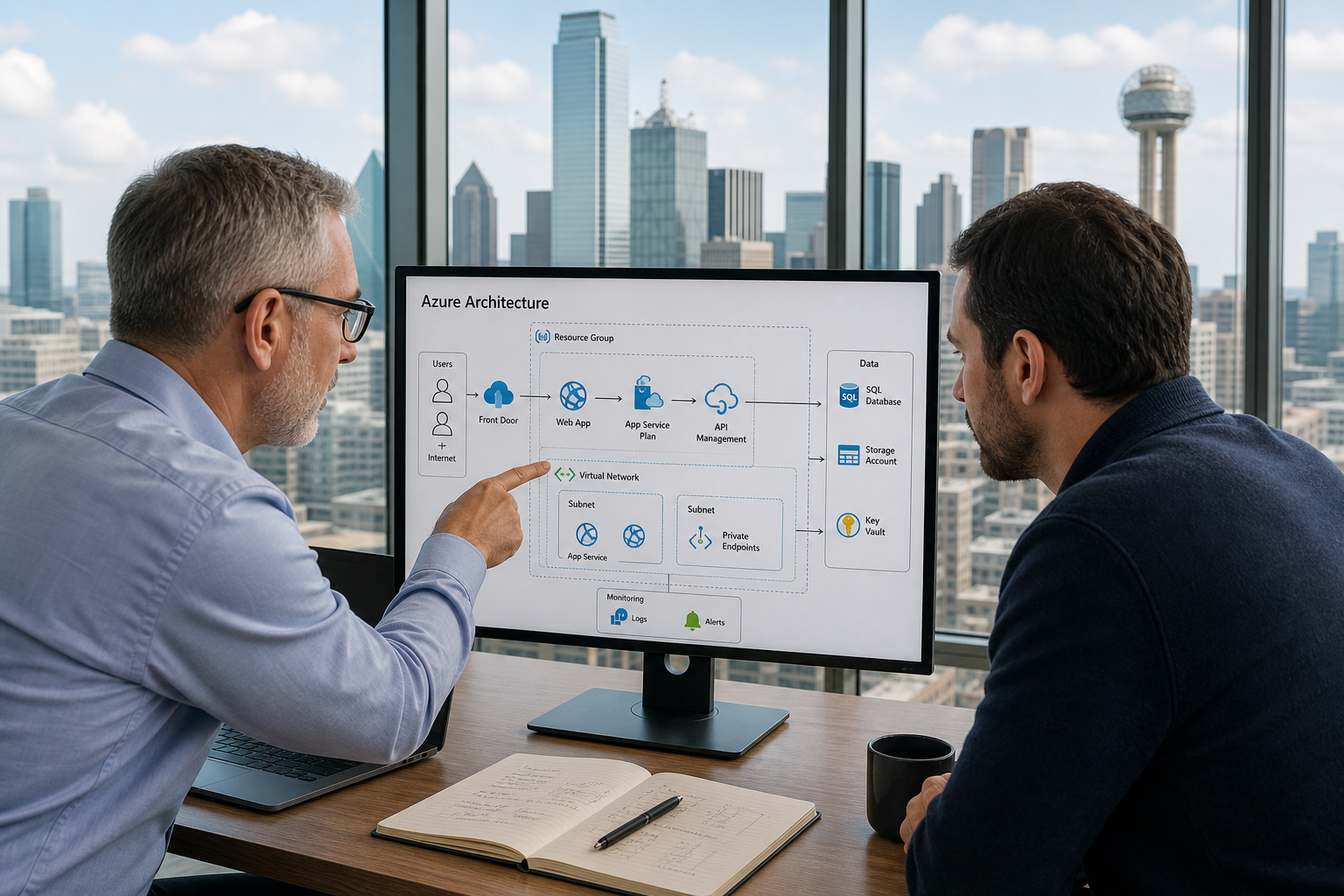
TechFirst consulting engagements are scoped to your existing landscape. A system architect works alongside your team to understand the current state before any recommendation is made. From there, the engagement can span advisory through hands-on implementation, depending on what you need. That might mean designing a cloud migration to Azure, rebuilding a legacy integration as a modern microservice, or introducing AI-driven automation into an operational workflow. The DFW market's strong Microsoft footprint means Azure is often the right path for identity and Windows workloads, and our core stack, covering .NET, SQL, Kubernetes, Docker, and CI/CD pipelines, aligns directly with what most Dallas IT shops are already running. There is no ramp-up time spent learning an unfamiliar environment.
Senior consultants do the work, not just the planning
A common frustration with consulting engagements is the gap between the strategy document and the actual delivery. TechFirst closes that gap by supplying both system architects and developers within the same engagement. The architect designs the solution; the developers build it. Both are senior, both are embedded directly in your project, and both are accountable to the same outcome. This matters especially for complex engagements like legacy modernisation or microservices migrations, where decisions made at the architecture level have immediate consequences for the developers writing the code. Keeping those two roles in the same conversation, from day one, is one of the clearest ways to avoid the costly rework that comes from handing off a design to a separate delivery team.
AI and automation are part of the engagement, not an add-on
Dallas businesses are actively adopting AI to drive operational efficiency, and IT consulting in the region reflects that demand. TechFirst's consulting practice includes generative AI development, AI agent design and deployment, and full AI integration into existing systems. These are not separate service lines bolted onto a traditional consulting offering. They are part of how we approach modernisation engagements from the start. If your organisation is evaluating where AI can reduce manual overhead, improve real-time data processing, or automate decision workflows, that conversation happens as part of the broader technology assessment, not as a separate sales process.
Stability and security are built in, not added later
Every TechFirst engagement carries a strong focus on operational stability, scalability, and security. For Dallas organisations in regulated sectors like healthcare or defense contracting, this is non-negotiable. Cybersecurity and risk advisory are woven into the consulting process, not treated as a separate workstream. Cloud infrastructure is designed for the workloads it will actually carry, not sized optimistically and adjusted after problems emerge. Azure's South Central US data centers serve the DFW region with low latency, which matters for latency-sensitive workloads. Getting the infrastructure right from the design phase is significantly less expensive than remediating it after go-live. See how this applies specifically to healthcare IT modernisation.